Why Every Bar Needs Trusted Recipes
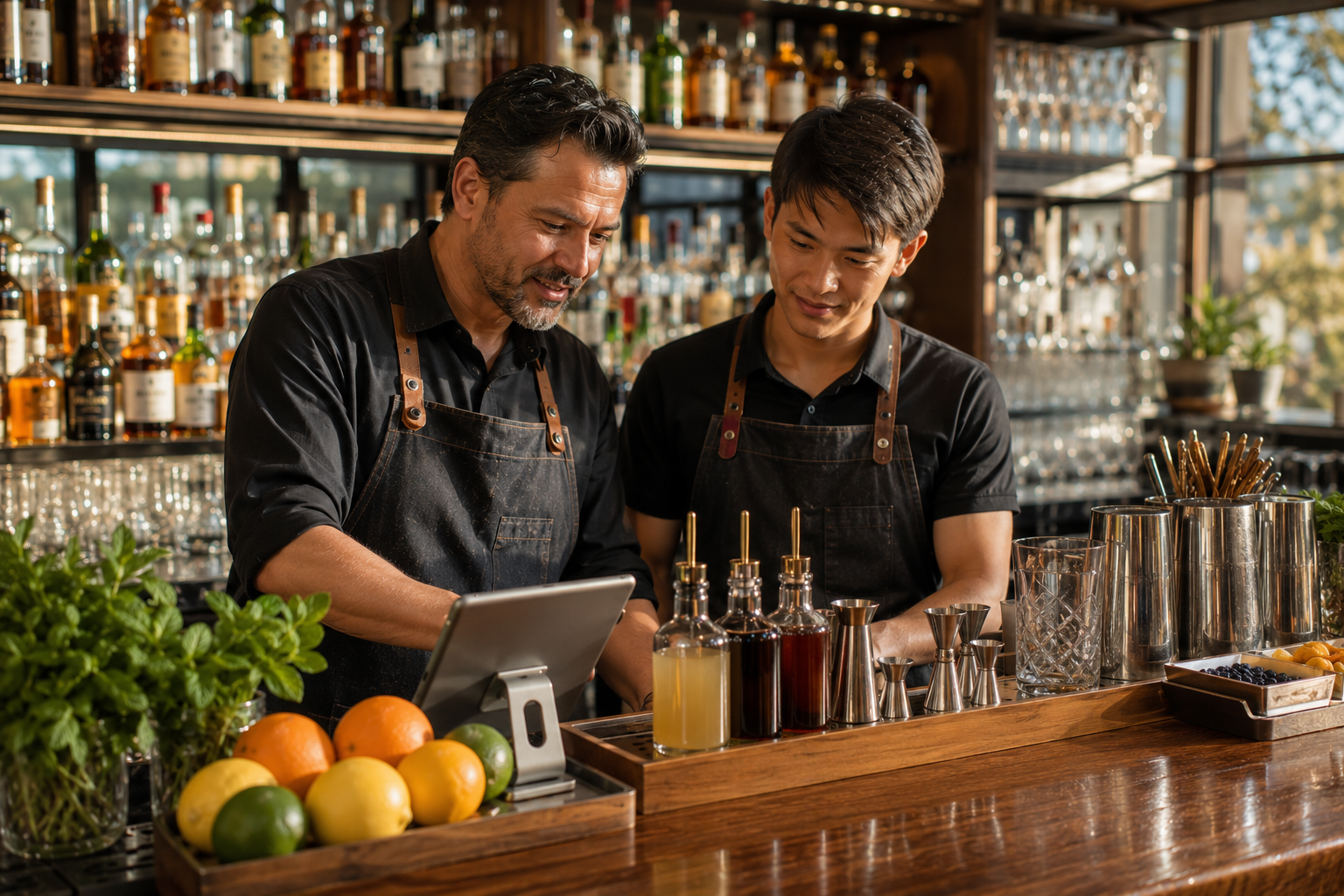
One of the pleasures of working in hospitality is watching someone become comfortable behind the bar.
It rarely happens all at once. Confidence arrives in small moments. A bartender who spent their first shift carefully checking every recipe begins to pour with certainty. Someone who hesitated over glassware suddenly reaches for the right coupe without thinking. A week earlier they needed to ask where the mint was kept; now they’re reminding someone else to refill it before service begins.
Every experienced bartender has watched that transformation happen, and every experienced bartender has been through it themselves.
What’s interesting is that the journey almost always begins with the same handful of questions. Not because new bartenders lack ability, but because every bar has its own recipes, standards and way of doing things. Learning those standards is simply part of becoming a member of a new team.
Ask ten experienced bartenders how to make an Old Fashioned and you’ll probably hear several perfectly valid answers. Ask those same bartenders how your restaurant makes an Old Fashioned and you’ll probably get silence. They don’t yet know which whisky you use, whether your house recipe calls for demerara syrup or sugar, how you garnish it, or whether your standard is a large cube of ice or something else entirely. They aren’t asking how to make an Old Fashioned. They’re asking how your bar has chosen to make one.
That distinction matters because it changes the way we think about training.
Managers sometimes hear these questions as interruptions. Every minute spent explaining a garnish, correcting a recipe or locating a prep sheet feels like time taken away from guests. I see them differently. They’re evidence that someone cares enough to get the drink right. The real question isn’t why the bartender is asking. It’s why the answer wasn’t already written down.
Think back to the first few shifts of almost any new bartender and you’ll hear the same themes repeated.
“How much goes in this?”

“Which glass should I use?”
“What’s the garnish?”
“Is this the current recipe?”
“Can you show me how we make this here?”
On the surface those are recipe questions. In reality they’re all asking the same thing.
How do we make this drink here?
Every bar eventually develops its own answers. House cocktails evolve. Classic recipes are adjusted to suit the menu. Signature drinks are refined over time. The challenge isn’t deciding how you want a drink made. The challenge is making sure everyone on the team can find the same answer.
Over the years I’ve become convinced that every repeated question carries an opportunity. If every new bartender asks which garnish belongs on the house Manhattan, perhaps the recipe isn’t documented clearly enough. If everyone needs to ask whether the Espresso Martini recipe changed last month, perhaps there isn’t one trusted version everyone can rely on. When the answer depends on which senior bartender happens to be working that evening, consistency becomes a matter of memory rather than documentation.
The best bars I’ve worked in all had one thing in common. They treated recipes as living documents. House cocktails evolved, syrups improved and seasonal drinks changed from year to year, but everyone knew where to find the current version. Nobody relied on memory alone, and nobody had to wonder whether the recipe they were using was still the right one.
That didn’t eliminate questions altogether, but it changed the nature of them. Instead of asking where to find a recipe, bartenders began asking why it had changed or how they could make it even better. Those are much more valuable conversations because they deepen understanding rather than simply filling gaps.
I once worked with a bartender who could handle a Saturday brunch almost effortlessly. The service printer never seemed to overwhelm him, coffees appeared alongside Mimosas without delay and guests never felt ignored. Watching him work, it was tempting to believe he simply possessed a natural gift.
The reality was much less mysterious.
He had removed as many unnecessary decisions as possible before the first guest arrived. His prep was complete, he knew his recipes, everything he needed was within reach and he never wasted time wondering what came next. That allowed him to devote his attention where it mattered most: to the people sitting across the bar.
I’ve also worked with bartenders whose knowledge of recipes was extraordinary. They could explain the history of almost any classic cocktail and discuss spirits for hours, yet they struggled to connect with guests because every drink demanded so much of their concentration. Their attention remained fixed on the mechanics of bartending instead of the hospitality happening on the other side of the bar.
That’s why I no longer think the purpose of training is simply to teach recipes.
The purpose of training is to create confidence.
Recipes are one part of that process, but they’re not the destination. The destination is a bartender who no longer worries about measurements because they’re paying attention to the couple celebrating an anniversary. It’s a bartender who notices that a regular seems quieter than usual. It’s someone who has enough confidence in the mechanics of the job that they can focus on the people who make the job worthwhile.
Trusted recipes accelerate that journey.
Every bartender should eventually know the classics by heart, but nobody should be expected to memorise every house cocktail, every seasonal special, every syrup, every batch recipe and every garnish specification during their first week. Having those recipes readily available doesn’t stop people learning them. It gives them the confidence to learn without worrying that they’re making drinks incorrectly.
The result is exactly what every manager wants. Bartenders spend less time searching for answers, recipes become more consistent and guests receive the same drink regardless of who’s working behind the bar.
Every new bartender will continue to ask the same five questions.
They should.
Curiosity is one of the qualities that makes someone a good bartender. The goal isn’t to stop people asking questions. The goal is to make sure the answers are easy to find.
That’s why recipes matter so much. They’re more than a list of ingredients. They’re the written record of how your bar prepares its drinks, from classic cocktails to signature creations, house syrups, batched cocktails and keg recipes. When those recipes are organised, current and available to everyone, bartenders gain confidence far more quickly.
Eventually, they stop asking, “How do we make this?”
They already know.
And that’s when they can give their full attention to the reason they became bartenders in the first place: the people sitting across the bar.